


 Cart
Cart
 sales@molnova.com


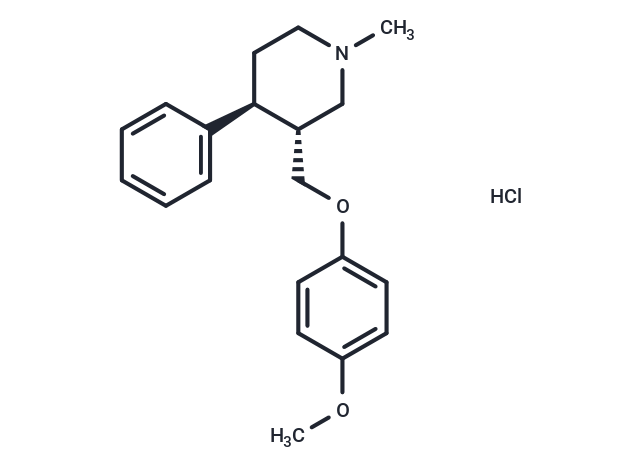
Femoxetine hydrochloride
CAS No. 56222-04-9
Femoxetine hydrochloride( —— )
Catalog No. M36272 CAS No. 56222-04-9
Femoxetine hydrochloride is a selective 5-hydroxytryptamine reuptake inhibitor used in the study of migraine, depression and eating disorders.
Purity : >98% (HPLC)
 COA
Datasheet
HNMR
HPLC
MSDS
Handing Instructions
COA
Datasheet
HNMR
HPLC
MSDS
Handing Instructions
| Size | Price / USD | Stock | Quantity |
| 2MG | 319 | Get Quote |


|
| 5MG | 504 | Get Quote |
|
| 10MG | 728 | Get Quote |
|
| 25MG | 1086 | Get Quote |
|
| 50MG | 1463 | Get Quote |
|
| 100MG | 1935 | Get Quote |
|
| 500MG | Get Quote | Get Quote |
|
| 1G | Get Quote | Get Quote |
|
Biological Information
-
Product NameFemoxetine hydrochloride
-
NoteResearch use only, not for human use.
-
Brief DescriptionFemoxetine hydrochloride is a selective 5-hydroxytryptamine reuptake inhibitor used in the study of migraine, depression and eating disorders.
-
DescriptionFemoxetine hydrochloride is a selective 5-hydroxytryptamine reuptake inhibitor used in the study of migraine, depression and eating disorders.
-
In Vitro——
-
In Vivo——
-
Synonyms——
-
PathwayGPCR/G Protein
-
Target5-HT Receptor
-
Recptor5-HT Receptor
-
Research Area——
-
Indication——
Chemical Information
-
CAS Number56222-04-9
-
Formula Weight347.88
-
Molecular FormulaC20H26ClNO2
-
Purity>98% (HPLC)
-
Solubility——
-
SMILESC(OC1=CC=C(OC)C=C1)[C@@H]2[C@H](CCN(C)C2)C3=CC=CC=C3.Cl
-
Chemical Name——
Shipping & Storage Information
-
Storage(-20℃)
-
ShippingWith Ice Pack
-
Stability≥ 2 years
Reference
molnova catalog



related products
-
Risperidone hydrochl...
An antipsychotic agent with serotonin-S2 and dopamine-D2 antagonistic properties.
-
Binospirone
Binospirone (MDL 73005EF) is a 5-HT1A receptor agonist with anxiolytic activity used in the study of glaucoma and movement disorders associated with neurologic dysfunction.
-
(4E)-SUN9221
(4E)-SUN9221 is a potent dual α1-adrenergic receptor and 5-HT2 receptor antagonist, exhibiting antihypertensive and antiplatelet aggregation activities in hypertensive rats.
